For fashion brands and B2B buyers, the practical difference between OEM and ODM knitwear production is the starting point of the project. OEM usually begins with a buyer-led design or specification. ODM usually begins with a product direction, reference style or factory-developed option that can be adapted for a target market.
The better route is not the one with the stronger label. It is the route that gives the project enough information to control quality, plan delivery and maintain consistency from the approved sample to bulk production.
OEM knitwear production: buyer-led development
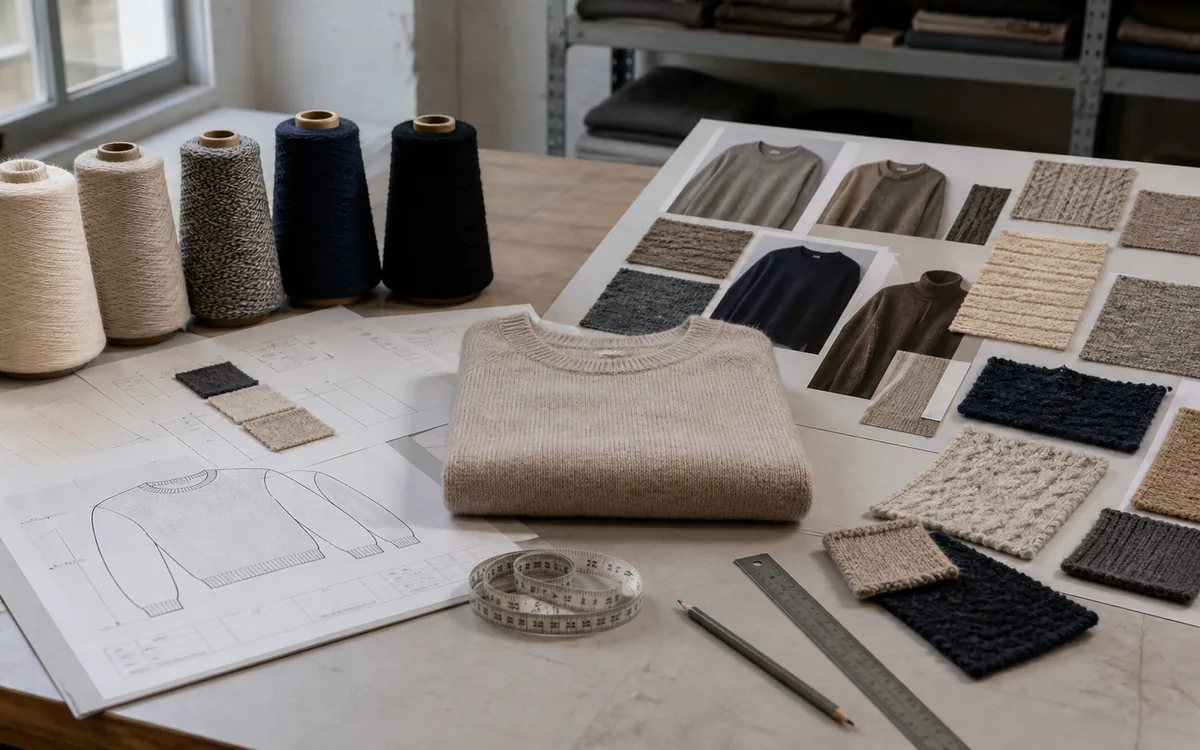
OEM is usually the better fit when the buyer already controls the product direction. The starting information may include a tech pack, reference image, physical sample, sketch, measurement chart or construction notes.
TYKNIT can review the available information and help clarify the parts that affect production feasibility, such as yarn direction, gauge, stitch structure, measurements, color, trims, labels, packaging and quality checkpoints. The exact production plan, starting quantity and timing are confirmed after the design and material requirements are reviewed.
OEM gives the buyer more control over the intended product, but it also requires clearer decisions. Missing measurements, unclear construction details or unconfirmed materials can create extra sampling rounds and make bulk planning less predictable.
OEM may suit buyers who have:
- A tech pack or established specification;
- A reference sample that needs to be developed for production;
- Defined measurements, fit and construction requirements;
- A brand-specific yarn, color, trim or packaging direction;
- A need to repeat or extend an existing collection.
ODM knitwear production: direction-led development
ODM can be useful when the buyer understands the market, season or customer profile but does not yet have a complete production specification. The project may start from an existing style direction, a reference image, a target category or a factory-developed product case.
TYKNIT can help buyers compare suitable directions, review customization options and turn the selected direction into a sample for evaluation. Depending on the style, the buyer may adjust yarn direction, color, size range, fit, selected details, labels and packaging.
ODM does not mean that every detail is pre-approved or that any existing style can be changed without limits. Materials, construction, quantity, timing and customization still need project review before sampling or bulk production is confirmed.
ODM may suit buyers who need:
- A faster starting point for a new knitwear category;
- Product directions for a seasonal or capsule collection;
- Existing styles that can be adapted for a target market;
- Support turning a reference idea into a production-ready sample;
- Flexible product development without building every specification from zero.
OEM vs ODM at a glance
| Decision area | OEM | ODM |
|---|---|---|
| Starting point | Buyer design, sample, sketch or tech pack | Product direction, reference style or factory-developed option |
| Buyer control | Higher control over defined specifications | Higher flexibility during early direction selection |
| Main preparation | Clear measurements, construction and brand requirements | Clear market, category, price positioning and customization goals |
| Development focus | Translate buyer specifications into a workable sample | Adapt a selected direction into a buyer-specific sample |
| Main risk to manage | Missing or conflicting specifications | Unclear customization priorities or product positioning |
How the choice affects quality, delivery and consistency
Quality
Both OEM and ODM rely on an approved sample and confirmed specifications. Quality becomes easier to evaluate when the yarn direction, measurements, construction, workmanship, finishing and packaging requirements are clear before bulk production.
Delivery
Delivery planning depends on more than the words OEM or ODM. Yarn and trim availability, construction complexity, color and size range, sample revisions, quantity, packaging and the production schedule all affect timing. Sample timing and bulk lead time should therefore be confirmed for the individual project.
Consistency
The approved sample, confirmed specifications and agreed quality checkpoints provide the reference for bulk production. Clear revision records and prompt approvals help reduce avoidable differences between development and repeat production.
What happens during sample development
A typical project may move through these decision points:
- The buyer shares the available design information or product direction.
- TYKNIT reviews technical feasibility and identifies missing details.
- Yarn direction, gauge, stitch, measurements, color and selected trims are discussed.
- A sample is developed for fit, construction and visual review.
- Revisions are recorded and the approved sample becomes the main bulk reference.
- Quantity, size range, labels, packaging, production timing and delivery requirements are confirmed for the project.
The exact sequence can vary with the style and the information already available. The purpose is to make the product and responsibilities understandable before bulk production starts.
What to send before requesting a quote
The following information helps TYKNIT review either an OEM or ODM inquiry:
- Reference images, sketch, physical sample or tech pack;
- Product category and target customer;
- Target quantity and planned colorways;
- Size range and target market;
- Yarn or hand-feel direction, if known;
- Required labels, trims and packaging;
- Target price positioning, if available;
- Desired sample and delivery window;
- Any testing, documentation or market-specific requirements.
If some information is not available, buyers can state what is confirmed and what still needs recommendation. This keeps the first review useful without turning assumptions into fixed specifications.
Which route should your brand choose?
Choose OEM when the product identity and specifications are already controlled by your team. Choose ODM when your team wants a practical starting direction and plans to adapt it for a particular market or collection.
Some projects combine both approaches. A buyer may start from an existing product direction, then provide detailed measurements, branding and construction requirements. The important point is to define which decisions are fixed, which are open to recommendation and which must be confirmed during sampling.
Start with a project review
Review OEM and ODM knitwear support, explore factory-developed product directions, understand knitwear sampling and check production and quality planning.
For labels and packaging, see Private Label support. When the basic requirements are ready, send the project information to TYKNIT.
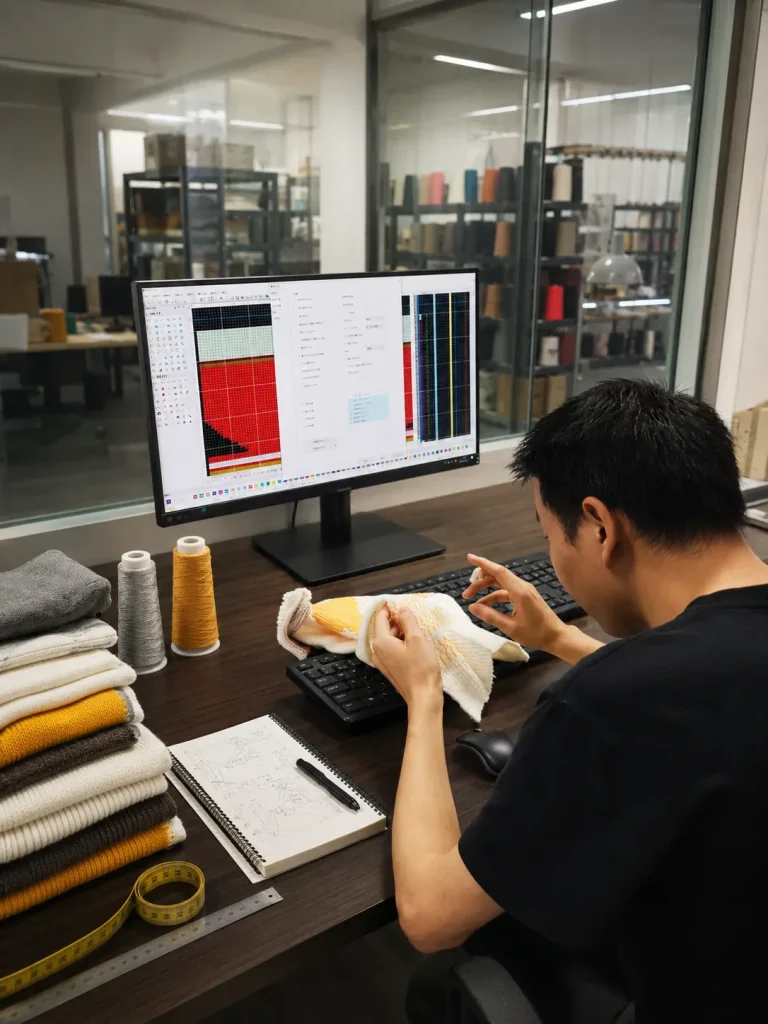
Why Knitwear Sampling Matters Before Bulk Production
Learn why knitwear sampling is important before bulk sweater production, including yarn selection, gauge, fit, measurements, finishing, quality control and production risk review.
Read insight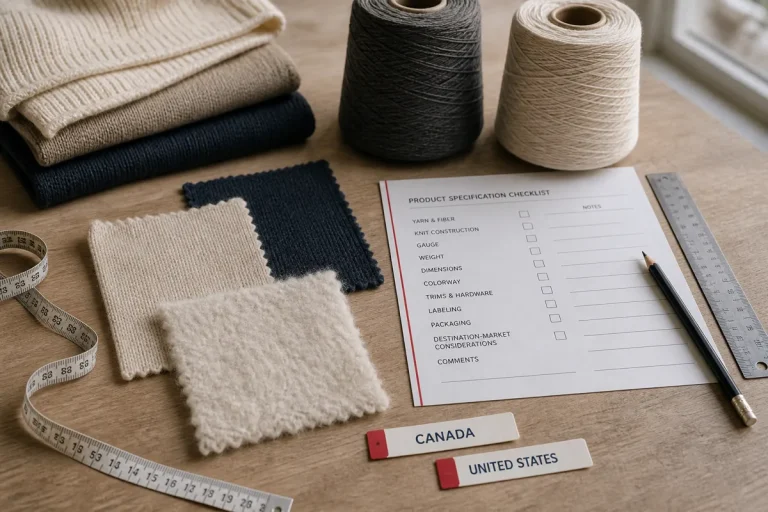
Making a Product Is Not Enough: Why Market Compliance Starts Before Production
A practical look at why destination-market compliance should be considered during product development, not after production begins.
Read insight
How Fashion Brands Choose a Reliable Knitwear Manufacturer in China
Learn how fashion brands choose a reliable knitwear manufacturer in China, including MOQ, sampling, yarn selection, quality control, private label support, and production communication.
Read insightPlanning your next knitwear project?
Explore our knitwear development and manufacturing capabilities.