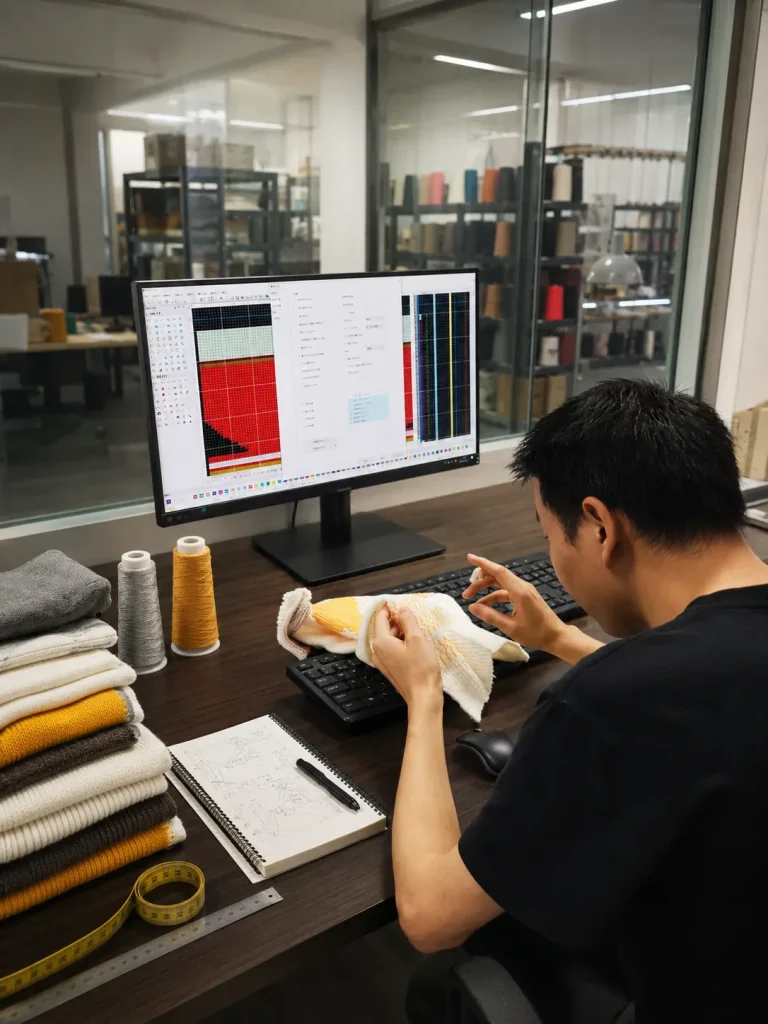
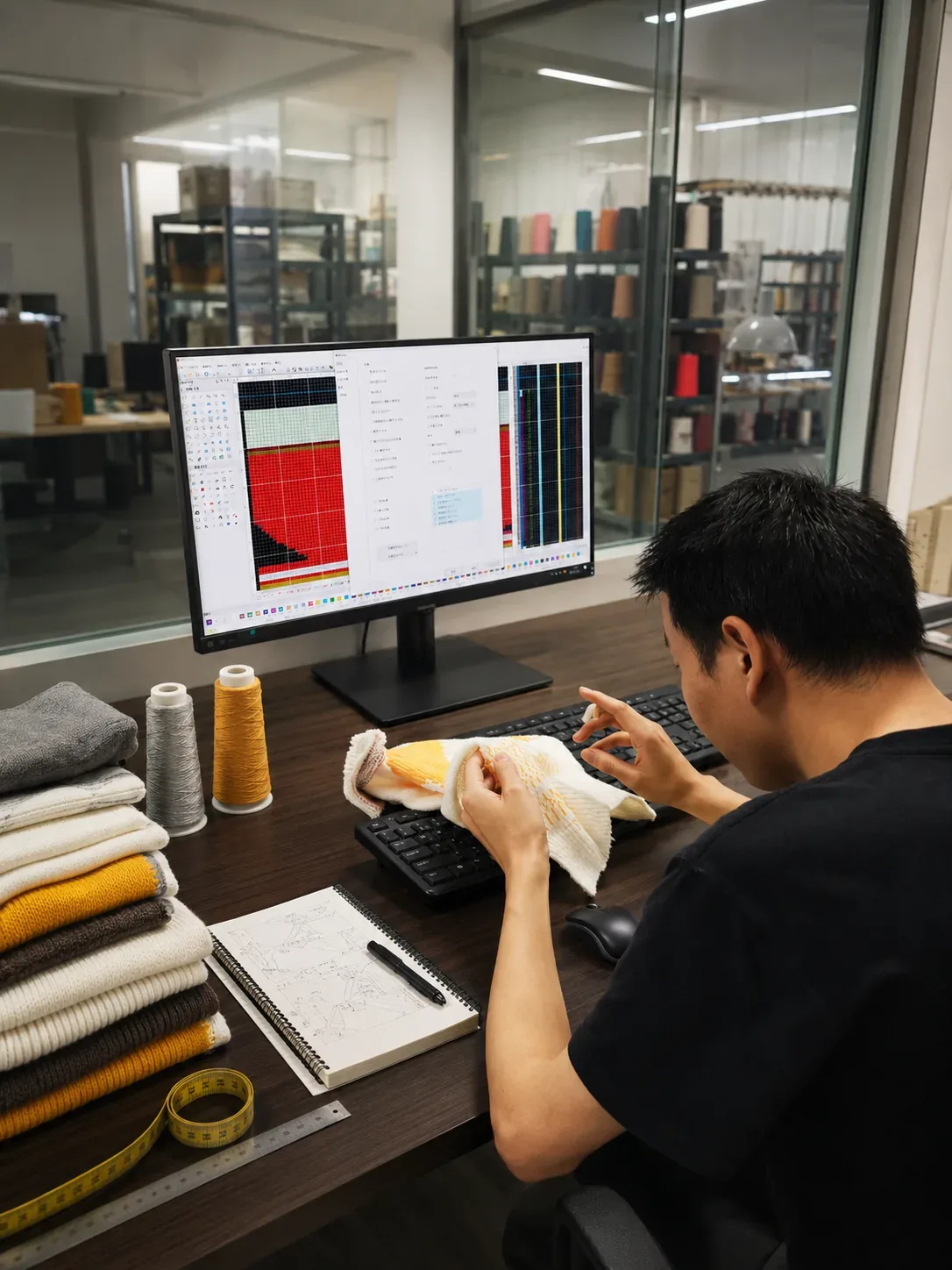
In custom knitwear production, sampling is not just a step before placing a bulk order. It is one of the most important stages for reducing production risk.
For sweaters, cardigans, knitted tops, crochet garments, vests, and private label knitwear, many details can affect the final result. Yarn, gauge, stitch structure, garment weight, color, fit, measurements, finishing, and packaging all need to be checked before bulk production starts.
A knitwear sample gives both the buyer and the factory a clear reference. It helps confirm whether the design is suitable for production, whether the material works for the target market, and whether the final product can match the brand’s expectations.
For fashion brands, boutique labels, wholesalers, and e-commerce sellers, good sampling can prevent costly mistakes before a larger order is produced.
What Is Knitwear Sampling?
Knitwear sampling means developing a physical sample based on a buyer’s reference image, tech pack, design sketch, original garment, or product idea.
During this process, the knitwear manufacturer reviews the design and checks how it can be produced in a practical way. This may include yarn selection, gauge choice, stitch structure, sizing, finishing, and production difficulty.
A knitwear sample usually helps confirm:
- Yarn composition and hand feel
- Gauge and stitch structure
- Garment weight
- Size and fit
- Color direction
- Neckline, sleeve, and body shape
- Pattern or texture effect
- Label, hangtag, and packaging details
- Washing, ironing, and finishing effect
- Bulk production feasibility
This is especially important for custom sweaters because the same design can look and feel very different when the yarn, gauge, or finishing method changes.
1. Sampling Helps Confirm the Right Yarn
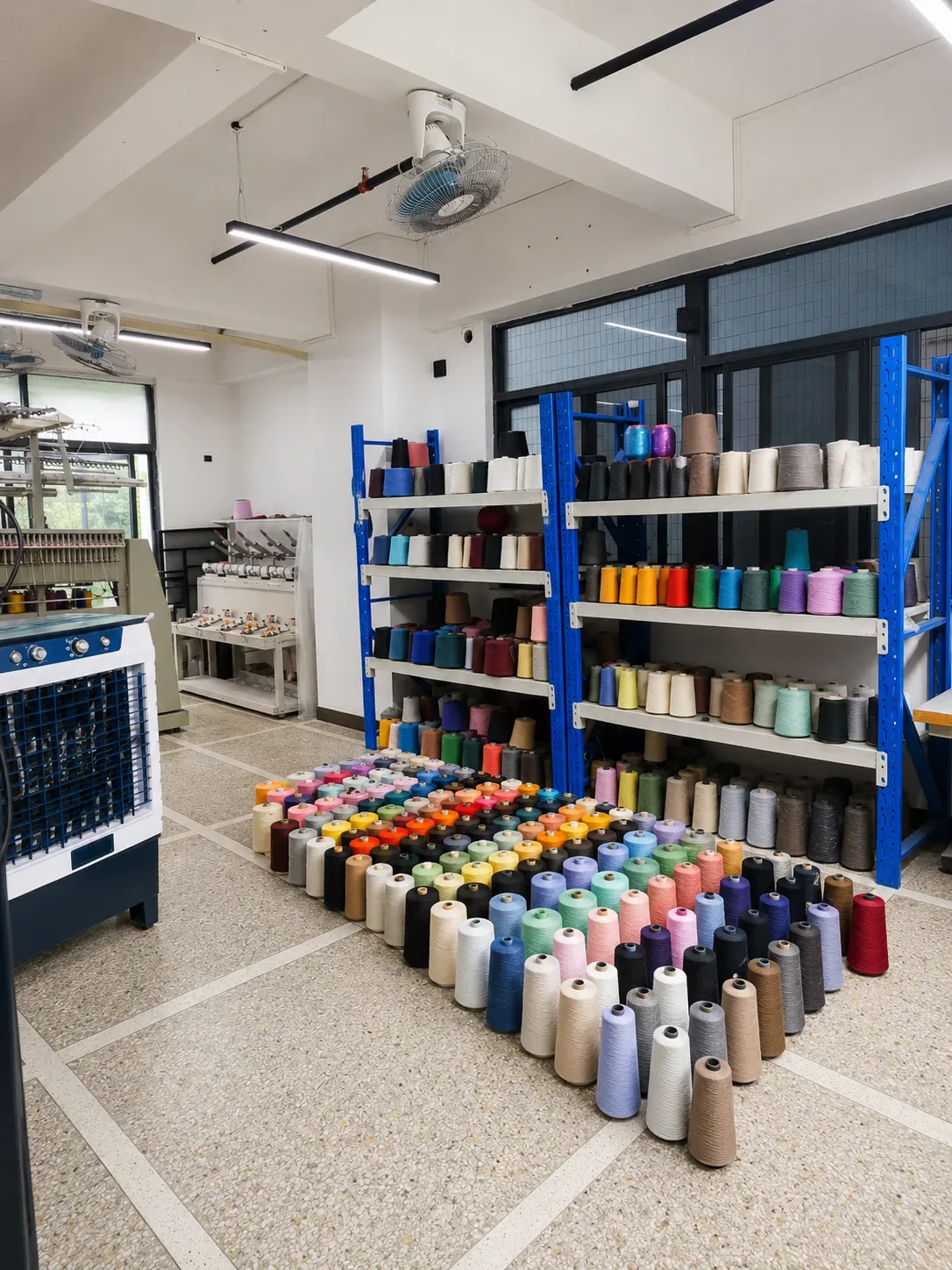
Yarn is one of the most important factors in knitwear production.
Before bulk production, buyers need to know whether the selected yarn can achieve the target hand feel, thickness, drape, warmth, stretch, and price range.
For example, a cotton blend sweater will feel different from a wool blend sweater, acrylic blend sweater, viscose blend sweater, or hairy yarn sweater. Even when the fiber composition looks similar, the final result can still change because of yarn count, twist, brushing, gauge, and finishing.
Sampling helps check:
- Whether the yarn matches the design
- Whether the hand feel is suitable for the target market
- Whether the yarn is stable for bulk production
- Whether the color is available
- Whether the cost fits the project
Without yarn confirmation, the final bulk product may not match what the buyer expects.
2. Sampling Helps Check Gauge and Stitch Structure
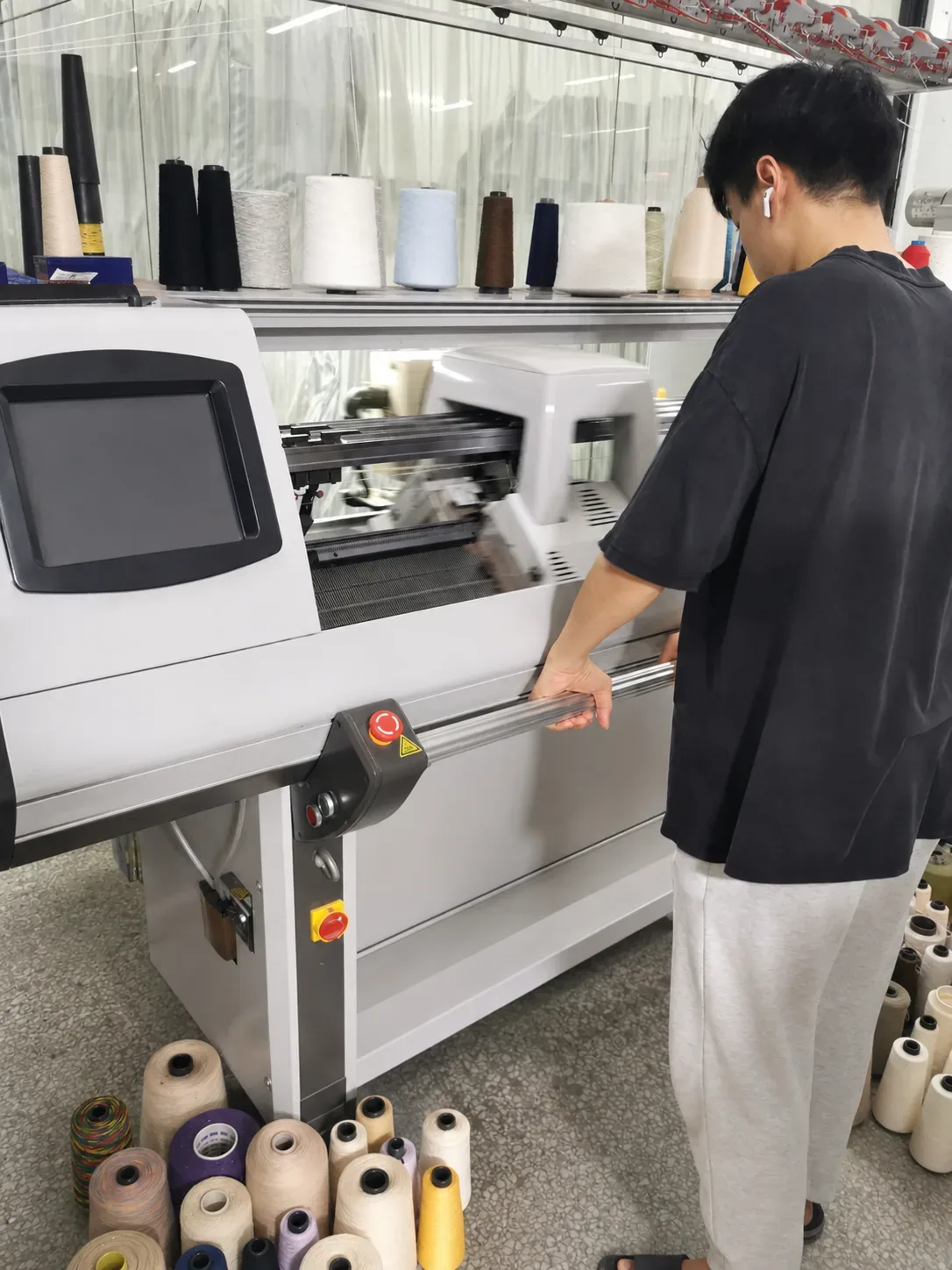
In knitwear, gauge and stitch structure directly affect the look, weight, size, hand feel, and production cost.
A design may look simple in a reference photo, but the actual production method may involve different structures such as rib, cable, jacquard, intarsia, pointelle, tuck stitch, crochet, or mixed techniques.
During sampling, the factory can review:
- Which gauge is more suitable
- Whether the stitch effect is stable
- Whether the pattern can be produced clearly
- Whether the garment weight is acceptable
- Whether the design needs adjustment before bulk production
This step is important because some styles look good in photos but need technical adjustment before they can be produced smoothly.
3. Sampling Helps Improve Fit and Measurements
Fit is another key reason why sampling matters.
For sweaters, cardigans, and knitted tops, small changes in body length, chest width, sleeve shape, shoulder line, neckline, hem tension, and cuff tension can change the final wearing effect.
A sample allows the buyer to check:
- Body length
- Chest width
- Sleeve length
- Shoulder shape
- Neckline depth
- Hem and cuff tension
- Overall fit and proportion
If the buyer has a size chart, the sample can also be used to confirm measurement tolerance before bulk production.
This is much safer than confirming a bulk order only based on photos or written descriptions.
4. Sampling Helps Reduce Bulk Production Risk
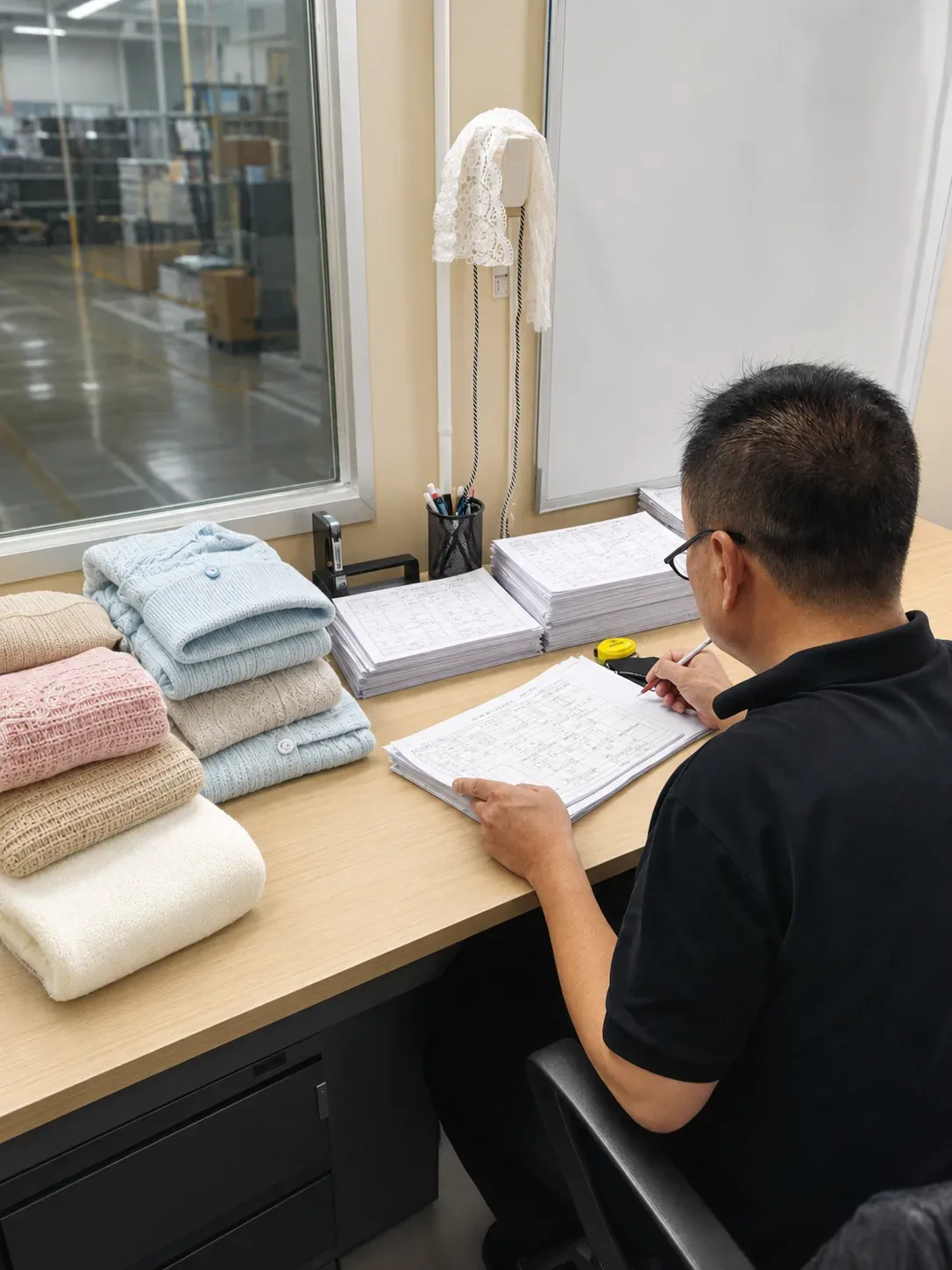
Bulk production should follow the approved sample as closely as possible.
If the sample details are not clear, the bulk order may face problems such as wrong hand feel, unstable sizing, incorrect color, poor finishing, or inconsistent garment shape.
A confirmed sample gives both sides a clear production reference.
Before bulk production, buyers should confirm:
- Approved yarn
- Approved color
- Approved measurements
- Approved workmanship details
- Approved label and packaging details
- Approved finishing effect
- Acceptable measurement tolerance
This helps reduce misunderstandings and makes production communication much clearer.
5. Sampling Helps Buyers Understand the Real Cost
For knitwear, the final price depends on many production details.
Cost may change based on yarn type, garment weight, knitting time, handwork, finishing method, color count, label requirements, and packaging method.
Sampling helps the factory understand the real production difficulty before giving a more accurate bulk price.
This is why a reliable knitwear manufacturer should not only quote quickly. The factory should first review the design, yarn, technique, size range, quantity, and production risk.
A low price is not always safer if the sample details are not confirmed.
6. Sampling Is Especially Important for Private Label Knitwear
For private label brands, the product does not only need to be produced. It also needs to match the brand’s quality standard and presentation style.
Sampling can help confirm:
- Brand label position
- Care label content
- Hangtag style
- Packaging method
- Color and size ratio
- Product presentation
- Final quality standard
For boutique brands, e-commerce sellers, and fashion startups, sampling can help create a more professional product before launching it to customers.
Common Mistakes Buyers Should Avoid Before Sampling
Many sampling problems come from unclear information.
Before starting a knitwear sample, buyers should avoid:
- Sending only one unclear reference image
- Not confirming target yarn or hand feel
- Not providing size range
- Not mentioning target quantity
- Not confirming target market
- Not discussing color requirements
- Not checking label or packaging needs
- Asking for the lowest price before the technical direction is clear
The clearer the buyer’s information is, the easier it is for the factory to suggest a practical sampling direction.
What Buyers Can Send Before Sampling
To make sampling smoother, buyers can send:
- Reference photos
- Tech pack, if available
- Target yarn or material preference
- Target color
- Size range
- Quantity per color
- Target price range
- Label and packaging needs
- Expected delivery timeline
- Target market or sales channel
With this information, the factory can review the style more accurately and give more practical production advice.
How TYKNIT Supports Knitwear Sampling
TYKNIT supports custom knitwear sampling for fashion brands, boutique labels, wholesalers, e-commerce sellers, and private label teams.
Our sampling review may include:
- Yarn and material suggestions
- Gauge and stitch review
- Color card discussion
- Fit and measurement checking
- Sample adjustment advice
- Bulk production feasibility review
- Label and packaging discussion
- Production risk feedback before bulk order
We support custom sweaters, cardigans, knitted tops, crochet knitwear, vests, OEM projects and ODM development, and private label knitwear production.
Starting quantity depends on yarn, technique, color count, and production requirements.
Frequently Asked Questions
How long does knitwear sampling take?
Sampling time depends on yarn availability, stitch structure, design complexity, finishing requirements, and whether revisions are needed. The schedule should be confirmed after the factory reviews the design and material requirements.
Is the sample exactly the same as bulk production?
The approved sample should be the main reference for bulk production. However, both sides should also confirm acceptable tolerances for measurements, color, weight, hand feel, and finishing before production begins.
Can a sweater sample be made from only a reference photo?
Yes, many styles can be reviewed from reference photos, but clearer information produces a more accurate sample. A size chart, material preference, target quantity, close-up details, and target market are helpful.
Why can the bulk price change after sampling?
Sampling may reveal the actual yarn consumption, knitting time, handwork, garment weight, finishing requirements, and production difficulty. These factors can make the final bulk price more accurate than an early estimate.
Does TYKNIT support flexible starting quantities?
TYKNIT offers flexible starting quantities. The appropriate quantity depends on yarn availability, technique, color count, custom accessories, and production requirements.
Start a Knitwear Sampling Project
If you are developing a custom knitwear collection, sampling is the best way to check the product before bulk production.
Send us your reference photo, tech pack, target quantity, size range, and material preference. TYKNIT can help review the yarn, gauge, fit, production feasibility, and sampling direction before you start bulk production.
Image Note: The four visuals in this article are illustrative TYKNIT website assets used to explain knitwear sampling, yarn selection and production-review concepts. They are not presented as photographs of specific TYKNIT customer projects or factory scenes.
Image source record: Existing site assets previously published on the About TYKNIT page. No third-party stock images were newly added for this article.
OEM vs ODM Knitwear Production: What Fashion Brands Should Know
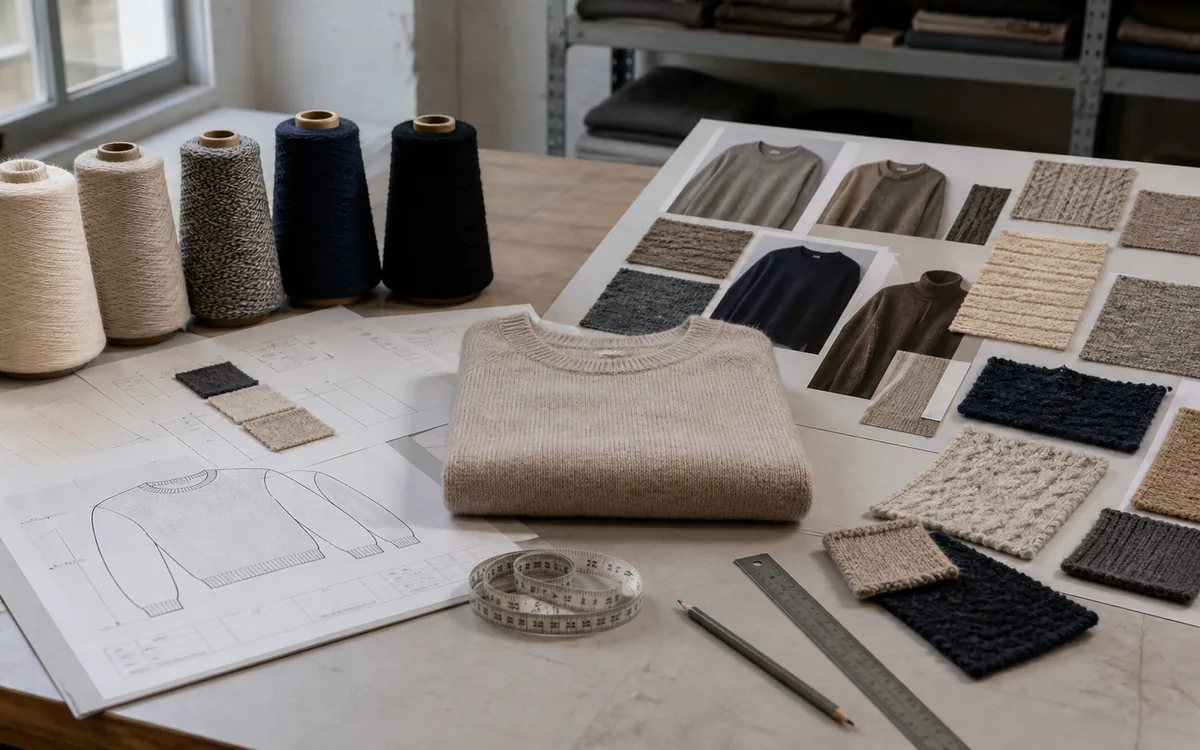
For fashion brands and B2B buyers, the practical difference between OEM and ODM knitwear production is the starting point of the project. OEM usually begins with a buyer-led design or specification. ODM usually begins with a product direction, reference style or factory-developed option that can be adapted for a target market. The better route is not the one with the stronger label. It is the route that gives the project enough information to control quality, plan delivery and maintain consistency from the approved sample to bulk production. OEM knitwear production: buyer-led development OEM is usually the better fit when the buyer already controls the product direction. The starting information may include a tech pack, reference image, physical sample, sketch, measurement…
Read insight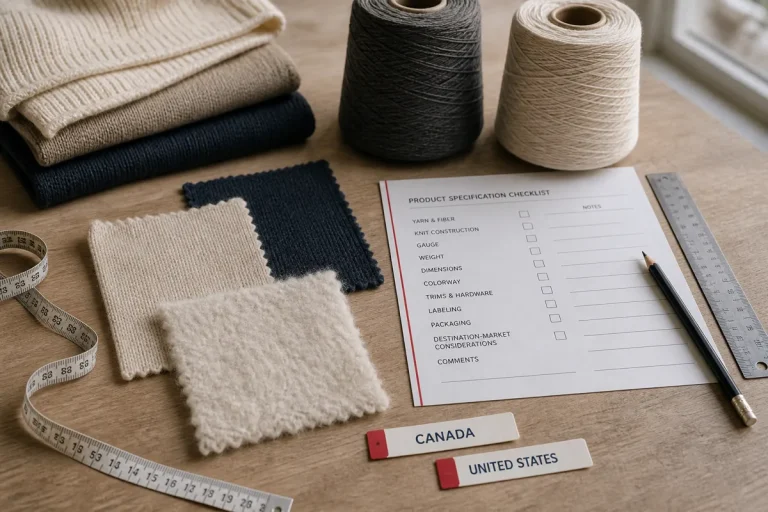
Making a Product Is Not Enough: Why Market Compliance Starts Before Production
A practical look at why destination-market compliance should be considered during product development, not after production begins.
Read insight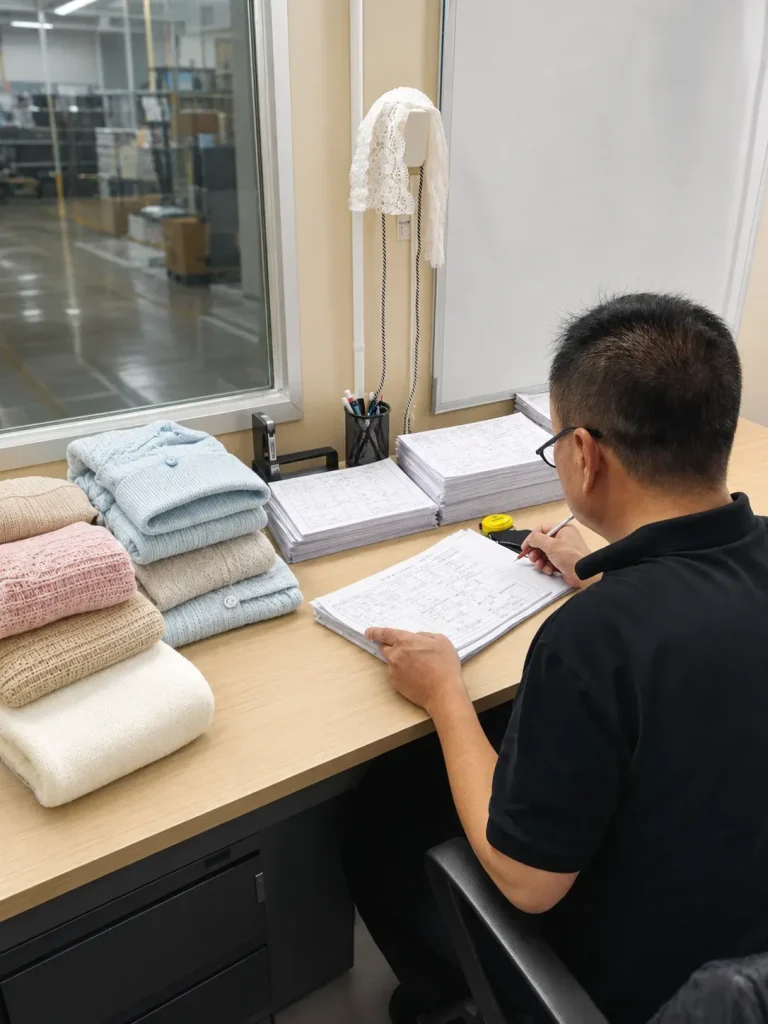
How Fashion Brands Choose a Reliable Knitwear Manufacturer in China
Learn how fashion brands choose a reliable knitwear manufacturer in China, including MOQ, sampling, yarn selection, quality control, private label support, and production communication.
Read insightPlanning your next knitwear project?
Explore our knitwear development and manufacturing capabilities.