Different markets may follow different rules. For manufacturers, understanding those differences is not about avoiding regulation—it is about building the right product for the right market.
In international manufacturing, making a product is only one part of the job.
The more markets a brand wants to enter, the more complex product development becomes. Canada, the United States, the European Union and other regions may regulate the same textile product through different legal frameworks, classifications, scopes and responsibilities.
That does not mean a manufacturer replaces a laboratory, compliance professional or regulator. It means the destination market should be identified early enough for the development team to ask the right questions, document assumptions and coordinate appropriate testing before production decisions become expensive to reverse.
One Product, Different Regulatory Frameworks
Textile flammability provides a useful example. Canada and the United States both use a 45-degree test orientation and a one-second flame exposure for general clothing or textile flammability assessment. It would therefore be misleading to describe the two test methods as completely different.
The important differences lie around the test: which law applies, how products are classified, which product categories have separate rules, what exemptions exist and who remains responsible for substantiating compliance.
Canada
Textile Flammability Regulations
Canada’s Textile Flammability Regulations are made under the Canada Consumer Product Safety Act and reference CAN/CGSB-4.2 No. 27.5. Health Canada’s industry guidance describes the general requirement as a flame-spread time greater than 3.5 seconds for textile products without a raised fibre surface, and greater than 4 seconds for products with a raised fibre surface when the base fibres ignite or fuse.
Some product categories—such as children’s sleepwear, bedding and tents—have separate or additional requirements. The correct assessment therefore depends on both the material and the intended product.
United States
16 CFR Part 1610
The U.S. Standard for the Flammability of Clothing Textiles classifies fabrics as Class 1, Class 2 or Class 3. Class 1 is normal flammability. Class 2 applies only to certain raised-surface textiles and indicates intermediate flammability. Class 3 textiles are considered dangerously flammable and may not be used in clothing.
The standard excludes certain items from its scope and provides testing exemptions for specified fabric constructions and fibre-content conditions. A testing exemption is not a blanket exemption from the legal requirement to comply. Children’s sleepwear is also governed by separate federal standards, subject to the definitions and exceptions in those standards.
What changes from market to market?
- Regulatory framework: the governing legislation and standard are not the same.
- Classification and outcome: Canada expresses general flame-spread requirements, while the U.S. system assigns flammability classes.
- Scope: product definitions and separately regulated categories must be checked in each market.
- Exemptions: testing exemptions, exclusions and special-category rules are market-specific.
- Responsibility: brands, importers, manufacturers and other supply-chain participants should confirm the obligations that apply to their role and product.
Compliance Can Begin With the Fabric Itself
For knitwear, regulatory risk does not suddenly appear when finished garments reach customs. Material and construction decisions made much earlier can affect the flammability behaviour of the final product.
Health Canada identifies factors including fibre content, fabric construction, fabric weight and finishes as relevant to textile flammability. In practice, this means that a development change that looks visually minor may still matter to performance.
- Fibre composition and blended-fibre ratios
- Fabric or knit construction
- Weight, density and surface character
- Brushing, raising and other mechanical finishes
- Chemical treatments, coatings or decorative additions
- The garment’s intended use and destination market
That is why market requirements belong inside product development and sampling. Early sample review can identify questions for qualified testing and compliance professionals while material, construction or finishing choices can still be adjusted.
More Markets Mean More Work—and That Is Part of Manufacturing
International brands often ask whether one product can be sold in several markets. Sometimes it can. But the answer should follow a market-by-market review, not an assumption that a pass, exemption or classification in one jurisdiction automatically transfers to another.
A responsible manufacturing workflow may need to coordinate:
- the product category and intended end use in each destination market;
- material and construction records for the tested or assessed product;
- representative samples and the correct preconditioning or refurbishment steps;
- qualified third-party testing where required or commercially appropriate;
- changes between sample approval and bulk production; and
- documentation that brands and importers need for their own compliance files.
This work does not guarantee a regulator’s decision, and it should never be presented as legal advice. Its value is operational: it helps prevent a destination-market requirement from being discovered only after the product, packaging and shipping plan are already fixed.
Compliance should not begin at customs. It should begin at product development.
Destination Market Should Be Part of the Product Specification
A complete product brief usually records colour, measurements, yarn, stitch, trim, quantity, delivery schedule and target cost. For international production, destination market belongs in that same brief.
Product parameters
- Yarn and fibre composition
- Gauge, stitch and construction
- Finish, trim and intended use
- Size range and performance expectations
Market parameters
- Countries or regions of sale
- Applicable product category
- Required or planned test programme
- Documentation and traceability needs
Once the destination is known, the manufacturer can flag foreseeable questions, preserve development records and help the brand arrange the right assessment. Final compliance determinations should still be confirmed with qualified professionals based on the actual product, market and current law.
Manufacturing Is More Than Making the Design
A sweater can match the approved sketch, measurements and colour and still be unsuitable for its intended market. The development conversation should therefore include four simple questions:
- Where will the product be sold?
- How is it categorised in each destination market?
- Which material, construction or finishing choices could affect the assessment?
- What testing, documentation and professional review should be completed before bulk production?
These questions do not turn a factory into a regulator. They make the manufacturing process more deliberate. The goal is not to promise legal certainty; it is to identify avoidable risk while the product can still be responsibly developed.
Official sources
Requirements can change and product-specific interpretation matters. Consult the current official materials:
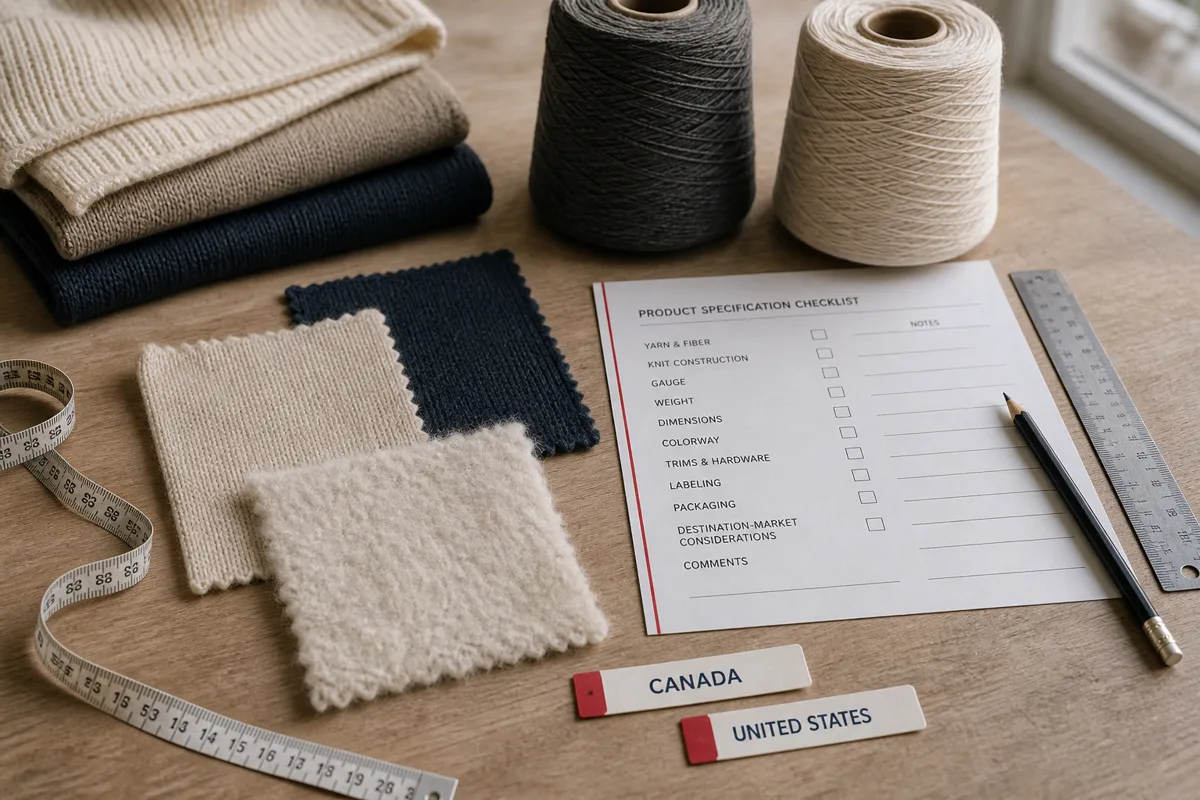
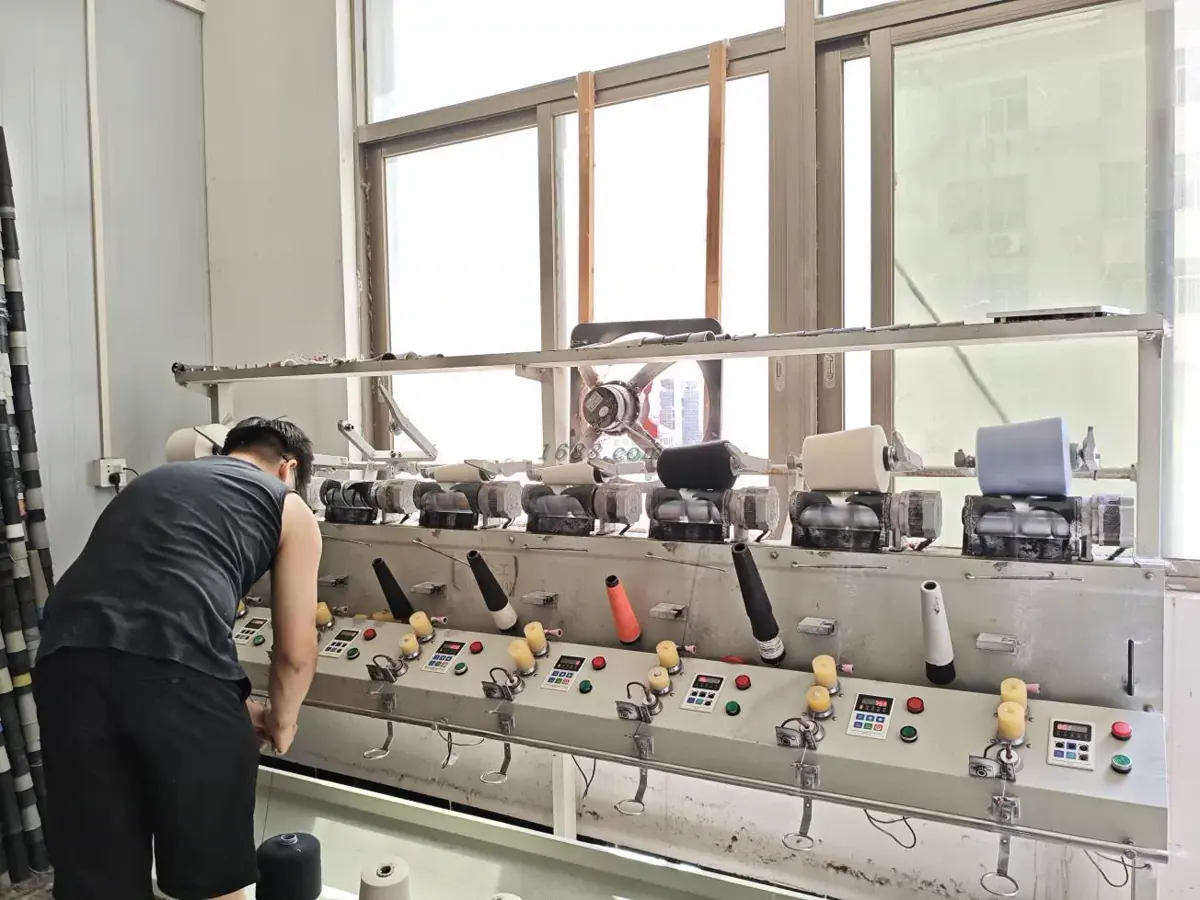
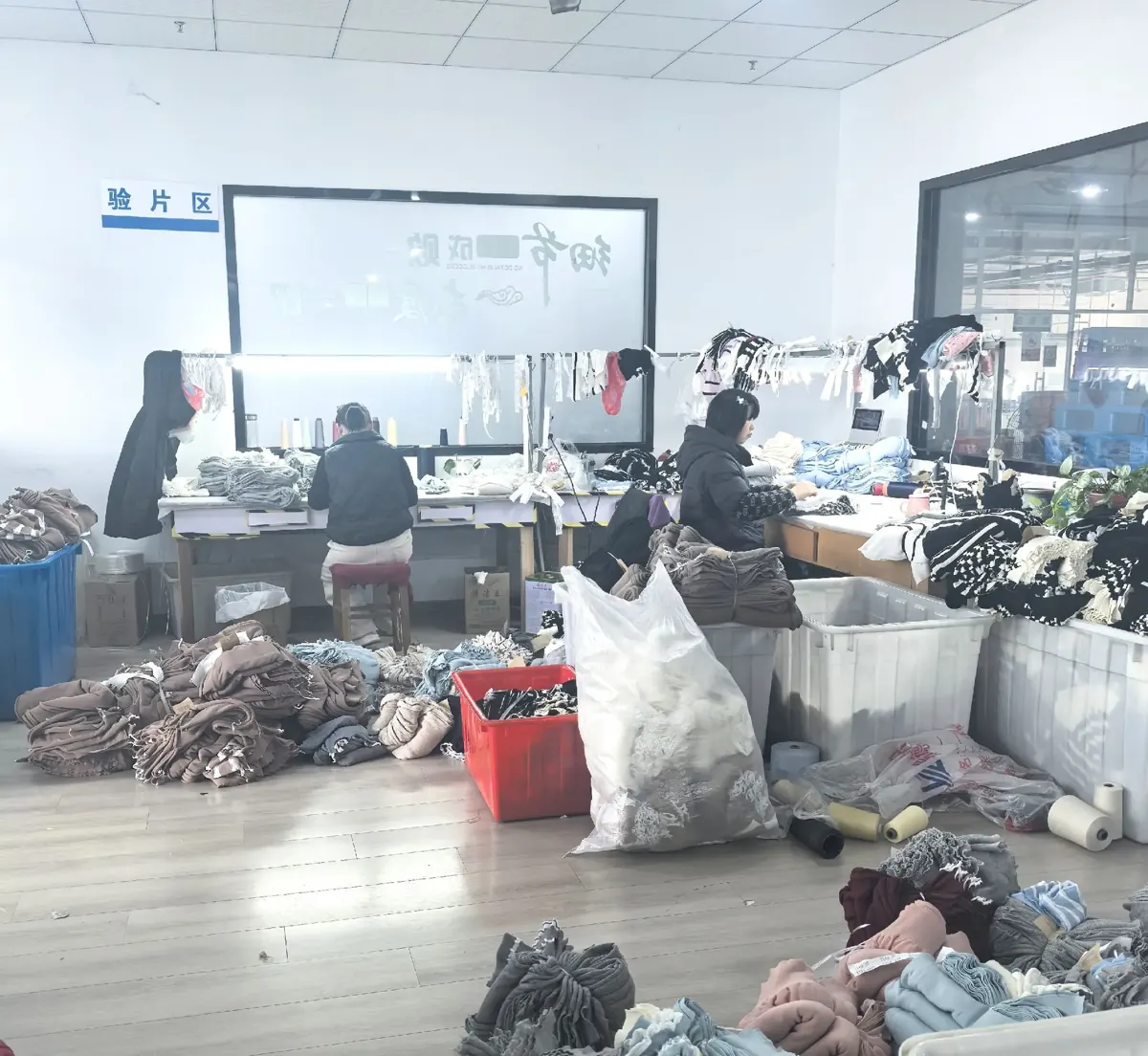
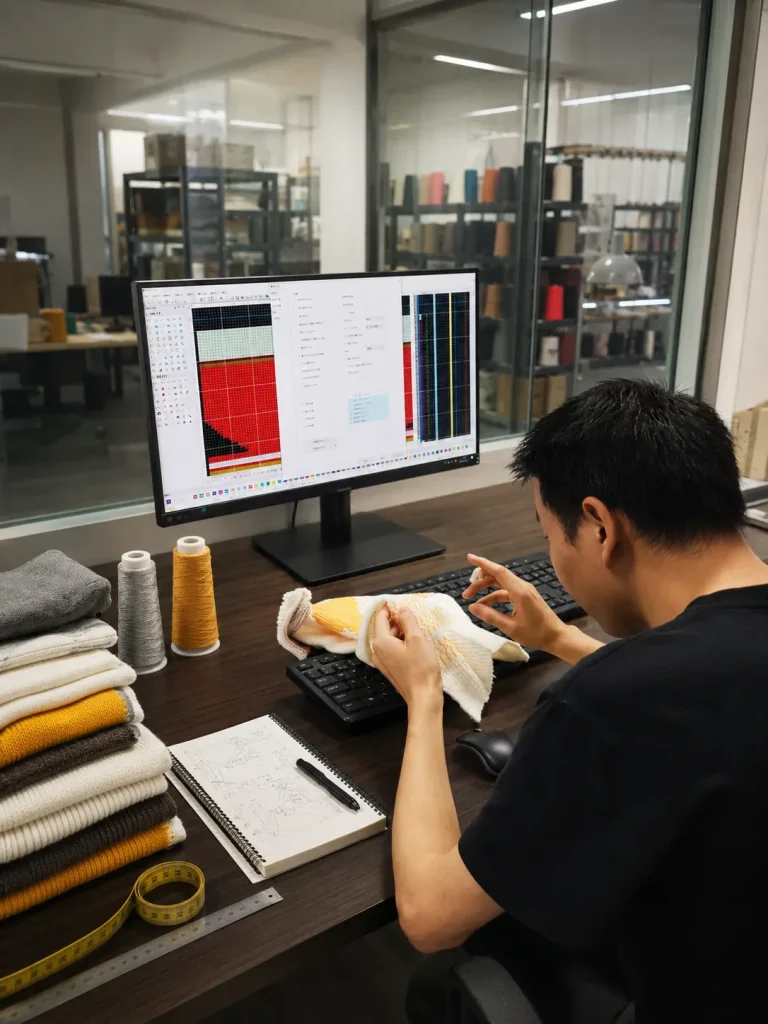
Image note: The opening image is an editorial illustration created for this article and does not depict a regulatory test or certification. The production images show TYKNIT yarn preparation and quality inspection; they are not presented as compliance-test evidence.
Why Knitwear Sampling Matters Before Bulk Production
Learn why knitwear sampling is important before bulk sweater production, including yarn selection, gauge, fit, measurements, finishing, quality control and production risk review.
Read insight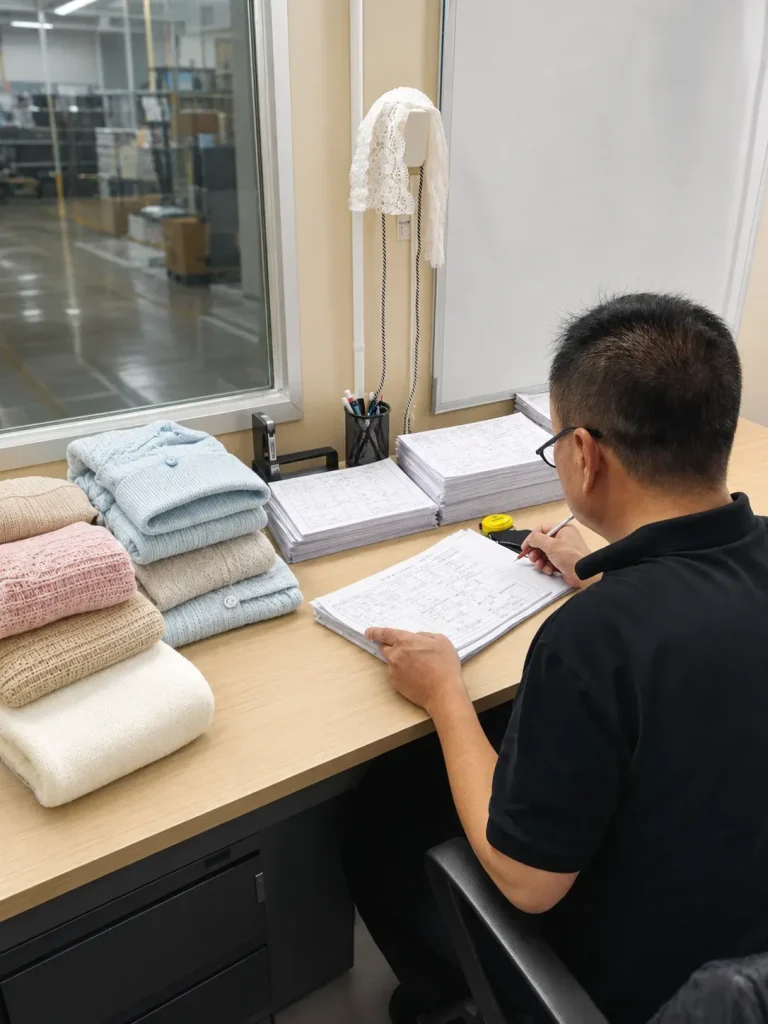
How Fashion Brands Choose a Reliable Knitwear Manufacturer in China
Learn how fashion brands choose a reliable knitwear manufacturer in China, including MOQ, sampling, yarn selection, quality control, private label support, and production communication.
Read insight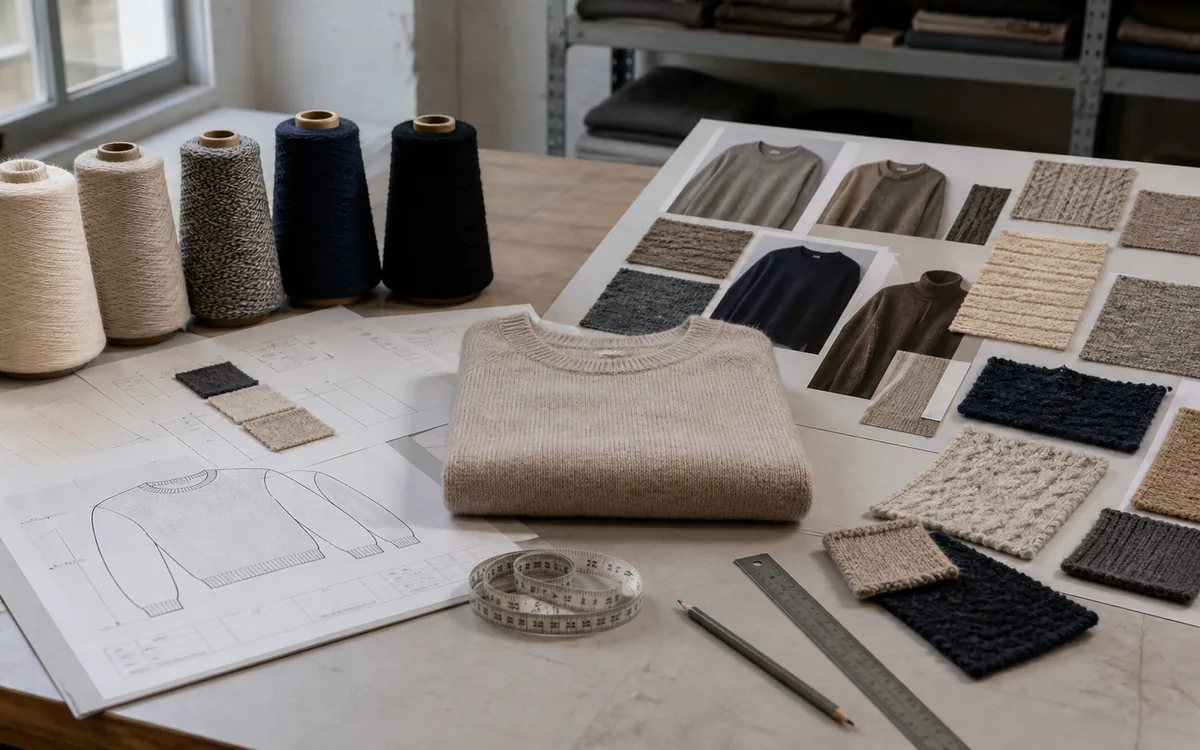
OEM vs ODM Knitwear Production: What Fashion Brands Should Know
For fashion brands and B2B buyers, the practical difference between OEM and ODM knitwear production is the starting point of the project. OEM usually begins with a buyer-led design or specification. ODM usually begins with a product direction, reference style or factory-developed option that can be adapted for a target market. The better route is not the one with the stronger label. It is the route that gives the project enough information to control quality, plan delivery and maintain consistency from the approved sample to bulk production. OEM knitwear production: buyer-led development OEM is usually the better fit when the buyer already controls the product direction. The starting information may include a tech pack, reference image, physical sample, sketch, measurement…
Read insightPlanning knitwear for more than one market?
Explore our knitwear development and manufacturing capabilities.